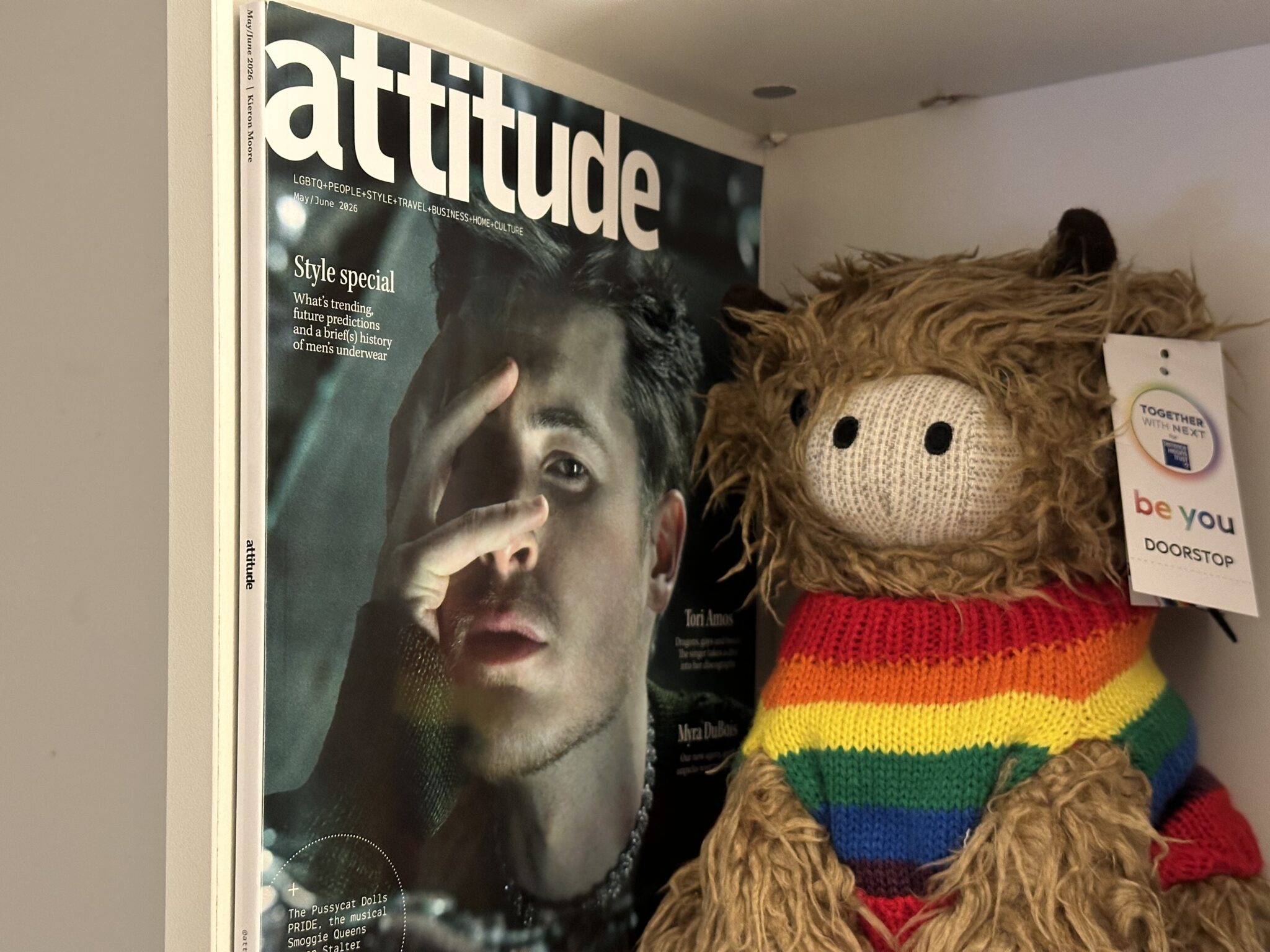
I recently tried to buy a copy of Attitude Magazine. But it wasn’t easy: no supermarket stocked it, no newsagent stocked it, no bookshop stocked it. I began to wonder why. Surely there are enough gay men in Cardiff to warrant at least one store stocking the UK’s most recognisable gay magazine? The reality, however, is more nuanced than demand alone.
LGBTQ+ media is still often treated differently from heterosexual media. Take the discourse surrounding Heated Rivalry as an example: yes, it was sexual by nature – but the reaction surrounding it demonstrated how gay stories are more likely to be labelled “explicit”, “controversial”, or “political”, even when mainstream heterosexual media contains similar – or far more sexualised – content. Heterosexuality is still largely treated as the cultural norm, whilst gay visibility is seen as more provocative.
The same double standard can be seen in publishing and advertising. Mainstream magazines aimed at heterosexual audiences are often displayed publicly without controversy and are viewed as “artistic”, whilst LGBTQ+ publications are perceived as niche, inappropriate, or risky to display publicly. Whether intentional or not, that affects visibility.
I’ve also noticed how difficult it can be for LGBTQ+ media projects to grow online. The strongest engagement comes from Bluesky, where discovery feels less dependent on opaque algorithms. On other platforms, particularly Instagram, reaching audiences is significantly harder.
That matters, because LGBTQ+ visibility matters. For many young people growing up, media can provide validation and reassurance, reducing isolation. This cannot occur if mainstream outlets continue to overlook or sideline non-heterosexual voices, and this reinforces the idea that people who are gay should remain hidden or marginalised.
So, perhaps the absence of Attitude Magazine in Cardiff is about more than one publication. Perhaps it reflects a wider discomfort around gay visibility itself – around whose stories are considered mainstream, acceptable, and worthy of public space. And that is why representation and independent media remain so important to me – and why I care so deeply about helping challenge that imbalance.
Leave a Reply